Nov 152014
 

Guest Editorial, from Mitchell Shnier …

For the past ten years the Ontario Ministry of Natural Resources and Forestry has been strongly advocating for a proponent they have selected to construct a hydro-electric generating station at the Bala falls (25 km north-west of Gravenhurst).

Below are some examples of why this proposed project has been a series of mistakes, misinformation, and misunderstandings – and therefore should not proceed. Basically, the proposed project would be too big, too ugly, and too dangerous.

However, starting October 20, 2014, the proponent intends to cut down all the trees on the site and remove the top-soil and then stop work until June 2015 when they hope to have all the required permits and contracts in place. So urgent action is required.

Summary

  1. This entire process started with a major blunder as both the MNR and the proponent thought the Crown land property on which the proposed generating station was to be built was much larger than it actually is. Since then they both have shown that avoiding inconvenient truths is an acceptable response to fair and relevant questions from the public.
     
  2. Recognizing that the location is a “tourist gem”, in their original 2005 proposal, the proponent committed that the proposed station would be below road level – but we now know it would not.
     
  3. The proponent also committed that the station would be “run-of-river”, but we now know it would instead be operated using cycling operation which is dangerous to both swimmers that will be nearby and boaters that need to travel through this unpredictable fast water to reach the nearby public and private docks. At many other times in the summer, the proposed station would operate at maximum capacity, creating even more danger to both swimmers and boaters that frequent this popular tourist area, yet somehow this was not of concern to Transport Canada even though they are responsible for assessing impacts to marine navigation.
     
  4. The proponent evades answering and refuses to admit that they would need to fence-off Margaret Burgess Park forever (this is the Crown land directly north of the Bala north falls). While this is the main vantage point for viewing the Bala north falls and from which people wade into the usually calm water, fencing would become necessary in an attempt to keep people away from the extreme danger this proposed project would create.
     
  5. Other Southern Ontario hydro-electric generating stations just don’t have Bala’s combination of; the falls being so important to the area’s economy, and the proposed generating station being so dangerous to visitors and residents. But the multi-year farce of environmental assessment process just blindly accepted any statement made by the proponent.
     
  6. Also meaningless was that the proponent was required to provide an economic impact study, but this did not ask for or report on any negative impacts, nor were any tourists interviewed. This study therefore clearly cannot provide any information on the net impact, yet the Ministry of the Environment found this acceptable.
     
  7. The proponent has stated their current proposal would have a positive impact on the historic Bala Portage when in fact it would actually obstruct and eliminate it. The Bala Portage is culturally important as written historical evidence has been provided that it was created and used by First Nations before 1837. There are no acceptable alternate routes, yet somehow this was not of concern to Transport Canada even though they are responsible to ensure portaging remains available.
     
  8. Two First Nations have given notice that the federal and provincial government’s Duty to Consult has not been fulfilled.
     
  9. The provincial government frequently justifies this proposed generating station by stating that there used to be a generating station on this site. However; the flow from that station was less than 10% of the proponent’s proposal, that station’s flow was directed away from the important recreational area at the base of the north falls, and that station was small enough that the Bala Portage was not obstructed. The station that used to be on the site is simply no justification for the too-big station proposed.
     
  10. The proponent would allow only 6% of the flow over the Bala falls throughout most of the year compared to Niagara Falls which is required to have at least 50% of the flow over the falls. Adequate scenic flow is just as important to the Bala area’s economy.
     
  11. It would make 400’ of the only public shoreline in Bala too dangerous to be near, and would obstruct the view down the river – the main reason passers-by currently stop. It would also eliminate the reason people have their weddings in Bala and photographs and painters come to Bala, for the view of the falls and the natural surroundings. This would remove an important contributor to Bala’s fragile economy.

Recently, an award-winning documentary film maker has announced he is working on “developing a film around the grassroots movement that’s opposing the power plant” – as the proposed project is so clearly wrong and the community’s opposition so broad and relentless.

Detail

Ten years ago, the Ministry of Natural Resources began a Competitive Site Release process to select a proponent to construct a hydro-electric generating station on Crown land at the Bala north falls (this is 25 km north-west of Gravenhurst, and 2 hours north of Toronto).

Since then, the process has been a continual stream of misunderstanding the area and situation, with the provincial government desperately pushing ahead regardless of all fact and reason. Examples are provided below (click on the underlined links for more detail).

  1. The MNR’s initiation of this proposed project in 2004 and 2005 showed they and the proponent did not know where the property boundaries were of the Crown land on which the proposed generating station was to be built as the proponent’s accepted qualification and proposal documents showed much of the proposed project being built on land which the Crown did not own. The MNR and proponent still refuse to admit this mistake, and this seems to have set the culture of this proposal that the MNR and proponent feel it is acceptable to evade and avoid inconvenient truths rather than having an honest and transparent discussion as would be professional and honourable.
     
  2. The proponent’s 2005 proposal:
    1. Acknowledged that the site is “a tourist gem” and committed to respecting this. For example, the proposal stated the proposed station’s “roof will be below road level and only some 5 ft above ground level”. However, the roof would actually be at least 20′ above the road  (proposal renege #1).
    2. Stated the generating station would be “run-of-river”, but we now know it would actually operate in a cycled mode, starting operation at about noon on more than 1/3 of summer days. This would be extremely dangerous as this is exactly when people would most likely be in the playing in the Moon River just a few feet from the treacherously-turbulent water which would silently and without warning begin exiting the proposed station. Being automatically- and remotely-operated, people would not be able to predict these unnatural, rapid, and unexpected changes in flow (proposal renege #2).
    3. Stated their project would “will not generally diminish the public’s enjoyment of the area for swimming, boating, fishing …” and in Section 2.2.5.10 of the proponent’s 2009 Environmental Screening Report the proponent acknowledged the importance of in-water recreational activities “Lake Muskoka (upstream of North Bala Dam) and Moon River (downstream of North Bala Dam) are popular boating, swimming, scuba diving and recreational fishing areas. The land alongside the falls is used for recreation and a number of benches are provided for public use. Many of these recreational uses take place at the base of Bala Falls.”
      But please note the following:
      • The MNR has recently stated “it would be the direct responsibility of Swift River Energy Limited to ensure appropriate public safety measures are in place”. The MNR has also required the proponent have the responsibility to maintain Margaret Burgess Park (this is the Crown land directly north of the Bala north falls). Clearly it would be in the proponent’s interest to be overly-cautious about any safety concerns – at the expense of the area’s economy.
      • The proponent has provided the evasive reply “We have no plans to fence off the park” – which is exactly the type of meaningless and frustrating response from the proponent that rightfully annoys the community.
      • Did you know that the generating station at the Bracebridge falls and the two generating stations upstream of it all have barbed-wire fencing, and that the same operator would be responsible for the proposed Bala station (and they obviously know how to put up ugly fencing).
      • The proposed project being just a few feet from the acknowledged and important in-water recreational area at the base of the falls would create new and extreme dangers.
      • As the proponent has not had a public safety study done, it is clear they would eventually simply announce the inevitable that their lawyers or insurance company has required them to fence-off Margaret Burgess Park as they would need to show they are attempting to keep people from endangering themselves.

      This would certainly “diminish the public’s enjoyment of the area” (proposal renege #3). It is wrong that the proponent be selected through a competitive process and yet they can renege on these (and several other) important commitments.
      Furthermore, the proponent is scheming to hide the truth from us until it is too late. This would be an unacceptable change to Bala, and the proponent’s evasiveness in not being truthful about this makes a mockery of their claims of public consultations.
      The taxpayers of Ontario should not be forced to pay a $100,000,000 subsidy to a proponent with such business ethics.

  3. I have personally visited 18 hydro-electric generating stations in southern Ontario and can report that the Bala falls are unique, as only the Bala falls:
    1. Drive the area’s economy, as that is the main reason people visit Bala, and the falls are right in the middle of Bala.
    2. Have nearby stores and restaurants which get a substantial portion of their business from such visitors. Literally bus-loads of tourists come to visit and photograph the Bala falls, which have been cited three times by National Geographic as world-class.
    3. Are accessible as they are directly adjacent to a main road, have free parking, do not have fencing, have rocks to climb on, and have a near-by park and washrooms.
    4. Have in-water recreation and docks within 50’ of the falls.
    5. Have residences within 200’ of the proposed generating station.

    Other generating stations just don’t have the combination of the falls being so important to the area’s economy, and the generating station being so close to and dangerous to people’s residences and in-water recreation.

  4. In their 2012 Environmental Screening Report, the proponent stated their current design would have a “positive impact to portage”. However it would actually obstruct and eliminate the Bala Portage, which was created by and used by the First Nations of the area.
    1. The proponent is providing incorrect information on a very important topic.
    2. Suggested alternate portage routes all either trespass over private property or are not safe.

    This is unacceptable.

  5. The proponent and the Ontario government justify the proposed generating station by citing that there used to be a generating station on the site, but:
    1. That previous station did not obstruct the portage.
    2. The proposed generating station would have more than ten times the flow and 25 times the footprint – that is as much larger as a 5-bedroom house is to a small garden shed.
    3. This flow was directed away from the in-water recreational area.

    That is, the previous station is simply no justification for the proposed station, which would be too big, too ugly, and too dangerous.

  6. The proponent would allow only 6% of the water over the Bala falls throughout most of the year. In contrast, international treaty requires that 50% of the flow of the Niagara River go over the Niagara Falls during daylight hours in the spring and summer (the rest of the flow is diverted through hydro-electric generating stations).
    The Bala falls are just as important to the area’s economy, so why no requirements for a fair scenic flow in Bala. People won’t come to Bala to see the dry rocks where the falls used to be. On six weekends of the year the proponent has stated they would provide a few percent more flow. The economy of Bala is important every day, this is a token rather than meaningful concession.
     
  7. The above two points show a major problem with this entire process. There is no requirement for balance. The proponent is simply given permission to proceed, and being a for-profit company with no requirements to actually make changes as a result of public input, the proponent becomes greedy.
    They are trying to build as large a station as would fit, taking as much water as they can. These are public lands and this is public water, yet the proponent is trying to do whatever they want, with the strong support of the MNR – which has no responsibility to let the public know what is happening.
     
  8. The proposed generating station would operate at its full capacity an average of 21 days every summer.
    1. This would bring the dangerously fast water that usually enters the Moon River through the Bala south channel over 250’ closer to the in-water recreational area at the base of the Bala north falls.
    2. This would also affect marine navigation, as boats would need to pass through this fast water to reach the only public docks on the Moon River, or to reach the three private docks that are even closer to the proposed station.

    This would be creating yet another danger to the public.

An interesting recent development is that Rob Stewart, the director of the award-winning documentary Sharkwater has announced that the wide-spread and justified community opposition to this proposed project would be the subject of his next film.

Another recent development is that area First Nations (the Wahta Mohawks and the Shawanaga First Nation, so far) have noted that the proponent provided incorrect information concerning the Bala Portage and therefore the consultation has been inadequate. The Wahta, the Township of Muskoka Lakes, and the District Municipality of Muskoka have therefore asked the proponent and MNR to ensure the federal and provincial government’s Duty to Consult is fulfilled before any work commences.

Conclusion

Too many major issues have been ignored, and this is a proposed project which should not proceed, as it would be too big, too ugly, and too dangerous.
Nov 132014
 

The background for this proposed project to build a hydro-electric generating station at the Bala falls is that Ontario Hydro used to be responsible for all power generation and transmission in Ontario. But as part of attempting to create competition for this monopoly, in 1998 the Ontario government split Ontario Hydro into several organizations – such as Ontario Power Generation (generates electricity) and Hydro One (plans, installs, and operates high-voltage transmission towers).

As OPG had huge overruns on the construction of some generating stations (most notably the Darlington nuclear generating station, but much of this was due to political delays), private companies would then be able to build and operate generating stations and this would hopefully be more efficient (due to competition) and the government would not have to take the risk of cost and schedule overruns as private companies would have this responsibility. To encourage private companies to take on this risk, the government would provide highly-subsidized and stable rates for the electricity with a guaranteed 20- or 40-year contract (this is the Ontario Power Authority’s Feed-In Tariff program).

The provincial government then had to create a process to provide the land on which new hydro-electric generating stations could be located. Since the Ontario Ministry of Natural Resources already had the responsibility for operating most of the dams in Ontario, they got the responsibility to release land the government owned with an arrangement where a private developer would get a long-term lease for the land on which to build a generating station and in return the private developer would have to maintain and operate the dam (for example, doing minor repairs and adjust stop-logs as required to maintain flows and water levels as required).

This turns out to be somewhat of a conflict of interest in that the MNR is also responsible for fish habitat, yet the turbines that drive the generators of a hydro-electric generating station kill fish, so the MNR no longer can fully represent the public’s interest in ensuring that fish are protected.

So in 2004 the MNR released an updated Policy and Procedure called Waterpower new Site Release and Development Review which prescribed the process for a “competitive site release” where specific sites would be made available for private developers (who are called “proponents”). The MNR would select a proponent for each site by solicitng proposals from potential proponents and evaluating them based on factors such as whether local First Nations would be involved, the quality of the site planning, and the financial capability and technical experience of the proponent.

The actual sites released were selected from a large list of potential sites (see the last 25 pages here) which considered factors such as how much power could be generated (depends on the flow and drop of the water), the distance the power lines would need to run to the nearest Hydro One connection point, the accessibility of the site, whether the site is protected for heritage purposes, and whether First Nations communities would be affected. Unfortunately, when selecting sites for release, the MNR did not consider potential negative impacts to the local area’s economy or public safety concerns. The MNR also made an inadequate check for impacts to sites important to First Nations, whether an established portage would be obstructed, and whether the waterbody has less Crown land frontage than is required by the Public Lands Act.

Also, it turns out the environmental assessment process is a farce, as a proposed project has never been stopped or even required to provide the additional level of detail of an individual environmental assessment.

Some other problems with this currently-proposed project are presented here.

Other concerns are detailed under “Recent Articles” at the right at SaveTheBalaFalls.com

Oct 232014
 

As most of us who support saving the Bala falls have found, others are initially surprised that we have questions about the provincial government’s support of, and the proponent’s effort to build, a hydro-electric generating station at the Bala falls.

Ted is a  supporter who was initially a skeptic has written this letter, which has been sent to senior politicians. The letter explains why he too now wishes to save the Bala falls, as he summarizes:

I believe the message is a good one and that it provides a strong case of why this project should absolutely be cancelled, but with a balanced view without demonizing those who think we’ve lost the battle and that we should be cooperating. I believe we need to continue to point out that the vast majority of those who appear to be on the other side, actually would far prefer to have the project cancelled too but, they feel we can’t fight Queens Park. Let’s keep the “no one really wants this project if they thought they had a choice” message out there. Let’s try a message of solidarity and shared concerns, that we all want what’s best for Bala and Muskoka, that we are not enemies and that we all are passionate about our wonderful little town in this paradise called Muskoka.

Oct 182014
 

Fact 1: As noted in the letter from the Deputy Minister of the Ontario Ministry of Natural Resources and Forestry cited here, the proponent does not have the required Plans and Specifications approval under the Lake and Rivers Improvement Act. They therefore do not have the subsequent Work Permit from the MNRF. And they don’t have the required Lease to Construct either.

Fact 2: The proponent does not have the Driveway Entrance permit and they do not have the Building Permit they require, both from the Township of Muskoka Lakes.

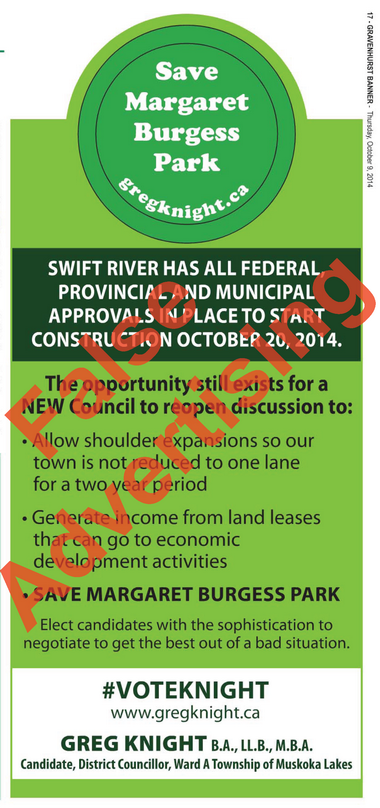
However, Greg Knight, candidate for District Councillor in Ward A of the Township of Muskoka Lakes placed the following ½-page advertisment in the October 9, 2014 issue of the Gravenhurst Banner.

Clearly, the proponent does not have all approvals. This candidate has therefore placed false advertising and is misleading the public.

He has either been duped and been taken advantage of by the proponent or he has grossly misunderstood them. In any case, it would not appear he has “the sophistication to negotiate” (as above) and this is yet another example of why his secret meetings with the proponent are bad for the public and are unacceptable behaviour for someone running for a public office.

And what is he talking about “our town”, he does not live in Bala. Also, his claims of “saving Margaret Burgess Park” are also completely misguided and mistaken, as detailed here.

Oct 162014
 

At the All Candidates meeting at the Bala Community Centre on September 22, 2014, Don Furniss said:

Did you know that Swift has now obtained all the permitting necessary required to start construction of cofferdams above and below the north dam. This project is moving forward.

Listen for yourself, by clicking on the triangle at the left end of the player below.

 
Don, your statement is simply not true.

For the proponent to begin construction, they require the Ministry of Natural Resources and Forestry to provide Plans and Specifications approval under the Lakes and Rivers Improvement Act. The MNRF can then issue a Work Permit, and then before any construction could begin the proponent requires a signed Lease to Construct, also from the MNRF.

However, in an e-mail dated October 15, 2014 Tracey Mill, the Deputy Minister of the MNRF stated:

MNRF regional engineering and district staff are currently reviewing the plans, specifications and supporting documentation that SREL submitted for LRIA approval. LRIA approval will not be granted until MNRF is satisfied that LRIA requirements are met.

and

As part of LRIA approvals, the proponent has submitted supporting information with respect to their planned public safety measures associated with the waterpower facility and operations. This information is currently being reviewed by MNRF regional engineering and district staff.

That is, the proponent does not yet have Plans and Specifications approval from the MNRF, so they also don’t have the required Lease to Construct. To build these cofferdams the proponent needs to access the Crown land. So Don, the proponent does not have “all the permitting necessary”.

Furthermore, to build the cofferdams the proponent would also require from the Township of Muskoka Lakes a Driveway Entrance permit from Bala Falls road to the Crown land beside Purk’s Place. The proponent does not have this approval either.

So Don, this is what you get for meeting directly with the proponent – misinformation and misunderstanding. You’re a stooge for the proponent, blindly repeating everything they tell you. As a result, you’re spreading their false information. You are acting for a developer. This is entirely inappropriate for a sitting Councillor and even more worrisome that you are a candidate for Mayor. This is a disservice to the public, and you should apologize.

Oct 082014
 

Summary

The proponent claims their 2012 Addendum was “factual”, but it was not:

  • The proponent’s 2009 Environmental Screening Review Report clearly showed that their Option 2 proposal would not have obstructed the Bala Portage (which has always been south of the Bala north falls).
  • But their 2012 Addendum shows that their current Alternative 1A proposal would obstruct the Bala Portage; however this Addendum stated this change would be a “postive impact to portage”.

Detail

We see from this letter from the proponent and the excellent coverage by MooseFM of this issue that the proponent has responded to the Wahta Mohawks’ concern about the lack of First Nations consultation for the planned obstruction of the Bala Portage and the Wahta’s subsequent notification that even after the proponent’s claimed consultation, the proponent further negatively impacted the Bala Portage by increasing the size of their proposed generating station by 48%.

Firstly, the proponent stated to Wahta Chief Philip Franks:

The 2009 ESRR design blocked the Moon and Lake Muskoka ends of the purported portage trail. The 2012 Addendum design was a ‘positive impact to the portage’ because only the Moon River end of the trail would be blocked. In other words, the Lake Muskoka end of the trail is not blocked (the ‘positive impact’) by the revised Project design.

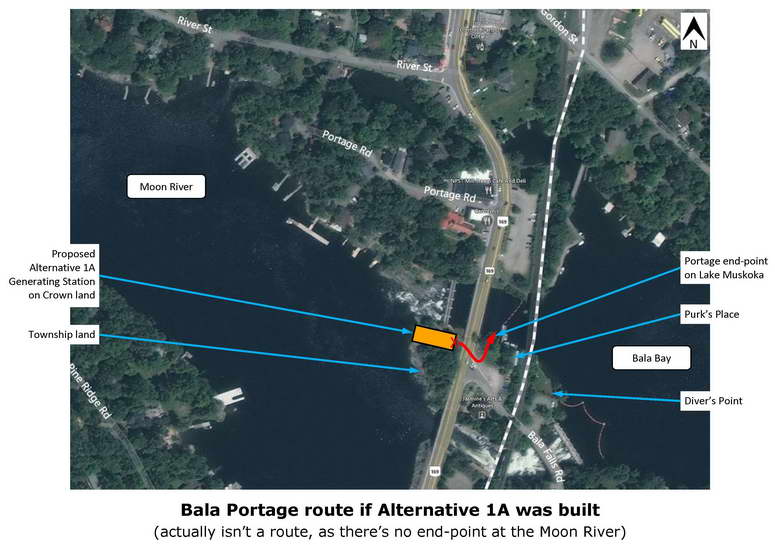
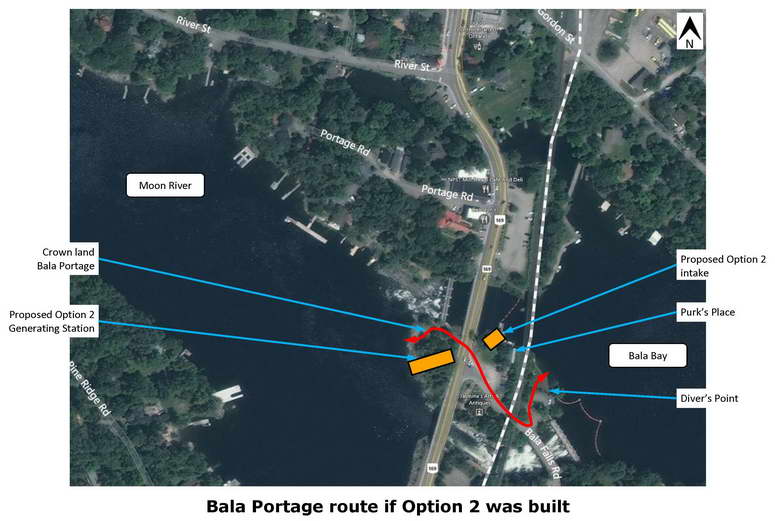
As shown by the red line in the graphic below, the proponent’s Option 2 design, which they presented in their 2009 Environmental Screening Review Report would not have obstructed the Bala Portage (click on the graphic for a larger view, and more detail is here):

  • The Bala Portage would not have been obstructed at the Moon River (as this area is outside of the restricted downstream safety boom area as shown in their Figure 6.5 – and the proponent would even have provided stairs to facilitate this access as noted in their Section 6.3.6.1).
  • And the Bala Portage would not have been obstructed at Lake Muskoka (in fact, in their Section 6.3.6.1, the proponent recommended Diver’s Point as an alternate location, just as is shown in the graphic below).

In fact, the information presented by the proponent in 2009 would have allowed the Bala Portage to continue to be used as it was by David Thompson in 1837 and by the First Nations even before that, from what is now called Portage Landing on the Moon River to Diver’s Point on Lake Muskoka, details here.

Clearly, the proponent’s 2009 Environmental Screening Review Report showed that the Bala Portage – south of the Bala north falls – could continue to be used.

However, as shown below, the proponent’s 2012 Addendum shows that for their current Alternative 1A plan, they relocated the planned site for their proposed generating station with the result that it would obstruct the Bala Portage at the Moon River. This is due to; the province’s actions in building the Muskoka Road 169 highway bypass in 1965, the location of the opening in the highway guardrail, and the slope of the land at Portage Landing. The result is that all of the routes which may have been used by the Bala Portage over the years, for which the proponent’s own study attempts to speculate, would be obstructed.

In summary, the Bala Portage has always been south of the Bala north falls. The proponent’s 2009 Environmental Screening Review Report showed that for their proposed Option 2 design, the Bala Portage would not have been obstructed. But the proponent’s 2012 Addendum showed that for their currently-proposed Alternative 1A design, the Bala Portage would be obstructed. This change is definitely not a “postive impact”.

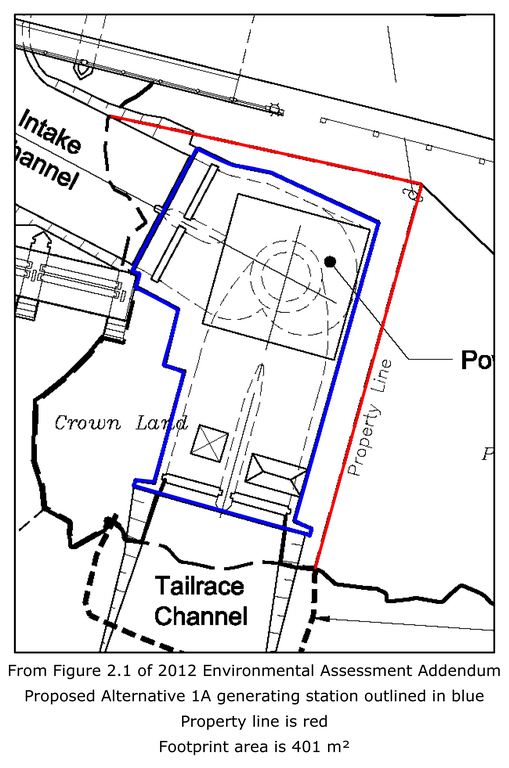
Secondly, as is further detailed here, in the proponent’s 2012 Addendum they provided a drawing of their proposed Alternative 1A generating station, the outline of which is highlighted in blue below (the red line is the Crown land property boundary).

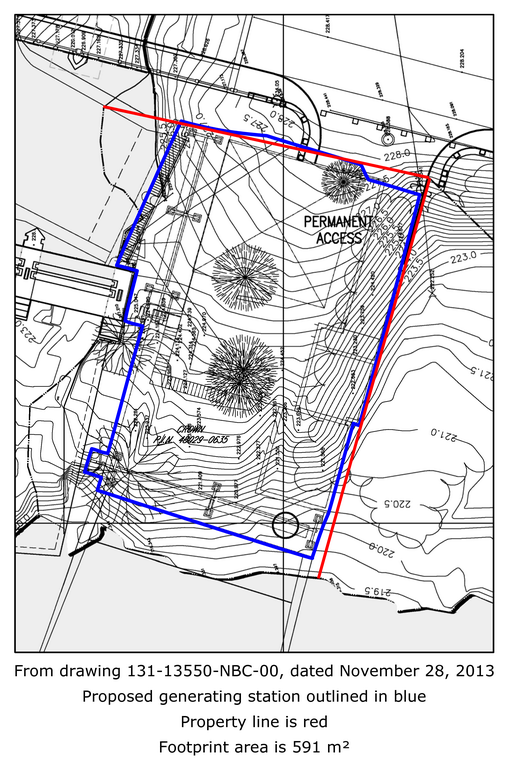
However, 18 months later – over a year after all claimed consultation was completed – the proponent provided a new drawing of their proposed Alternative 1A generating station as part of their Driveway Entrance permit applications. The blue line below highlights the new outline.

Carefully measuring the areas of both of these Alternative 1A outlines shows that after the proponent finished consultation and after they received environmental approval for their 2012 design, the proponent increased the footprint of their design by 48%. The Bala Portage lands are culturally significant to the Wahta and other First Nations of the area, and there should have been consultation on this further negative impact on these lands.

Oct 062014
 

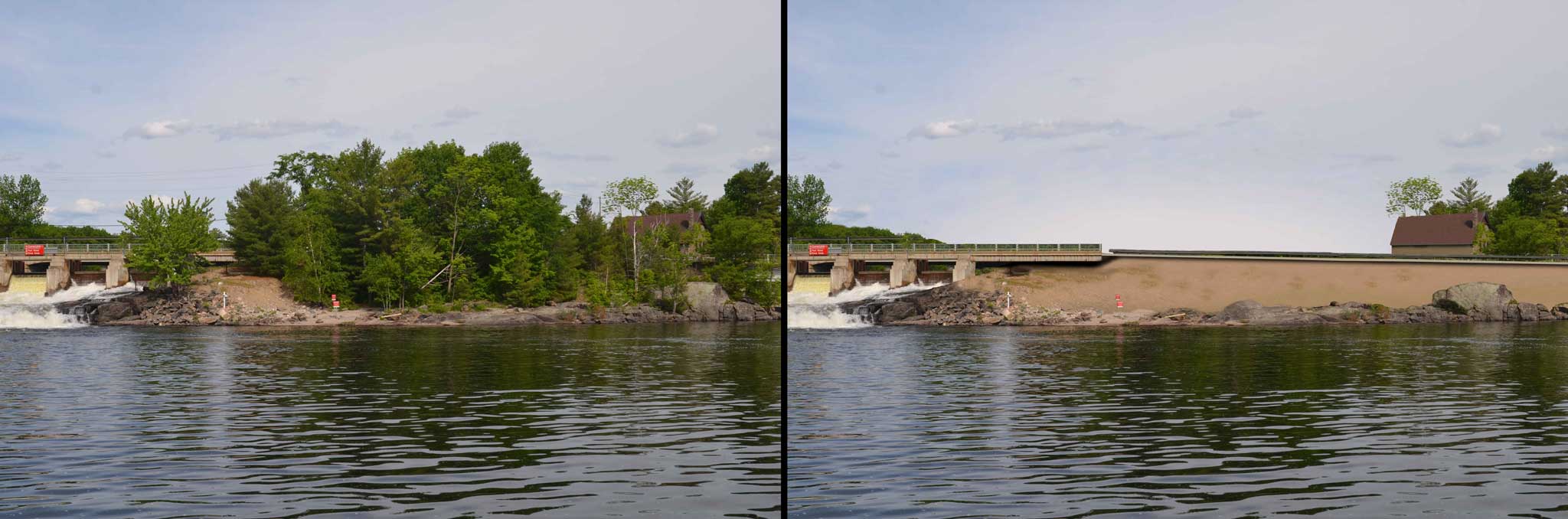
Some are trying to have us believe that the proponent’s self-serving offer of “saving” Margaret Burgess Park during their proposed construction would be in the community’s interest. Let’s look at the big picture and the facts (for a larger view, click on the photographs).

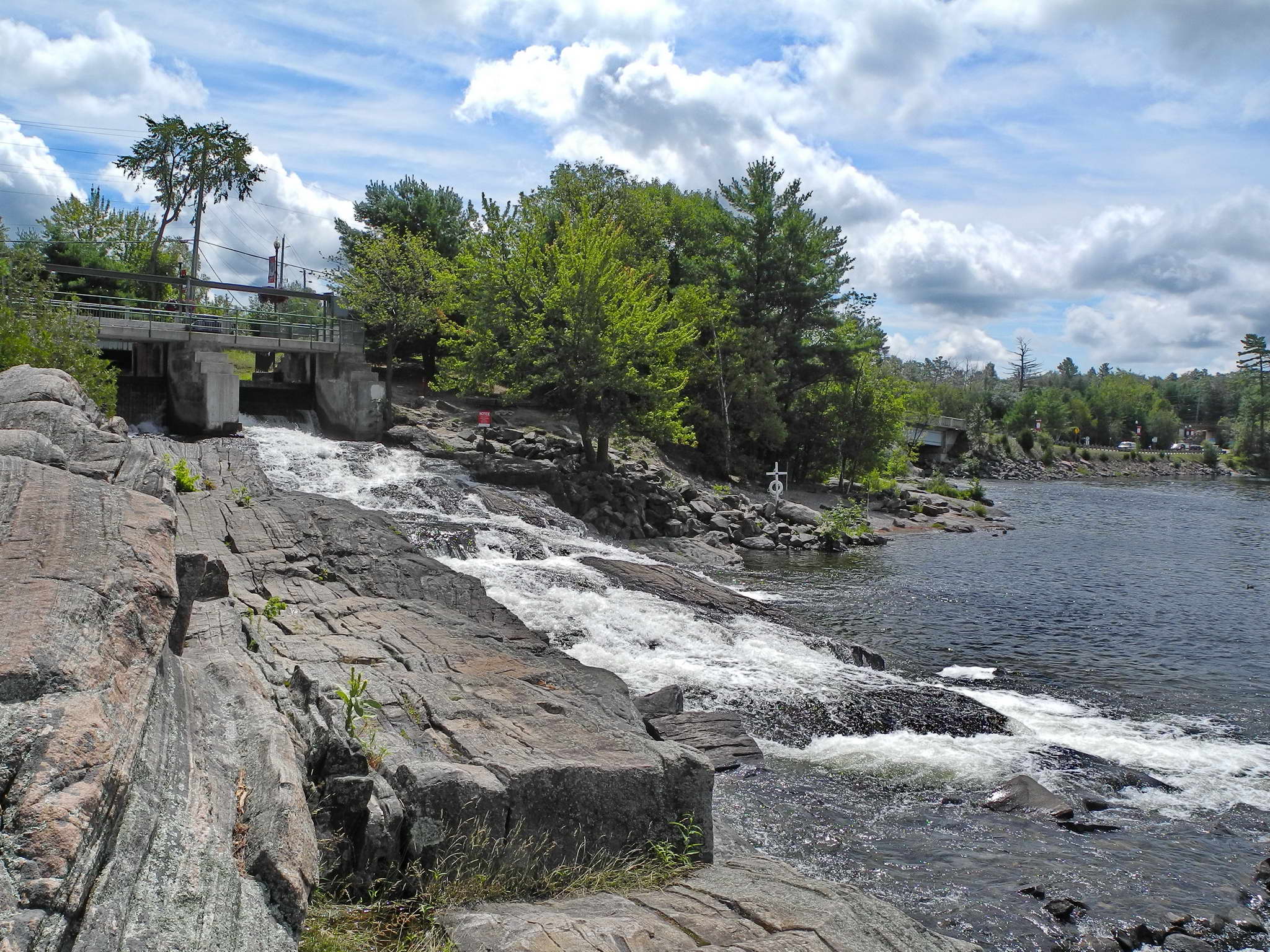
Above we see the current view from Margaret Burgess Park – people visit to see the trees and the rocks and the water.

But the first step of the proponent’s planned destruction would be to cut down all the trees on Portage Landing (the Township land south of the proposed construction site). No more trees to see. This would be painful, nobody would come to Margaret Burgess Park to see that.

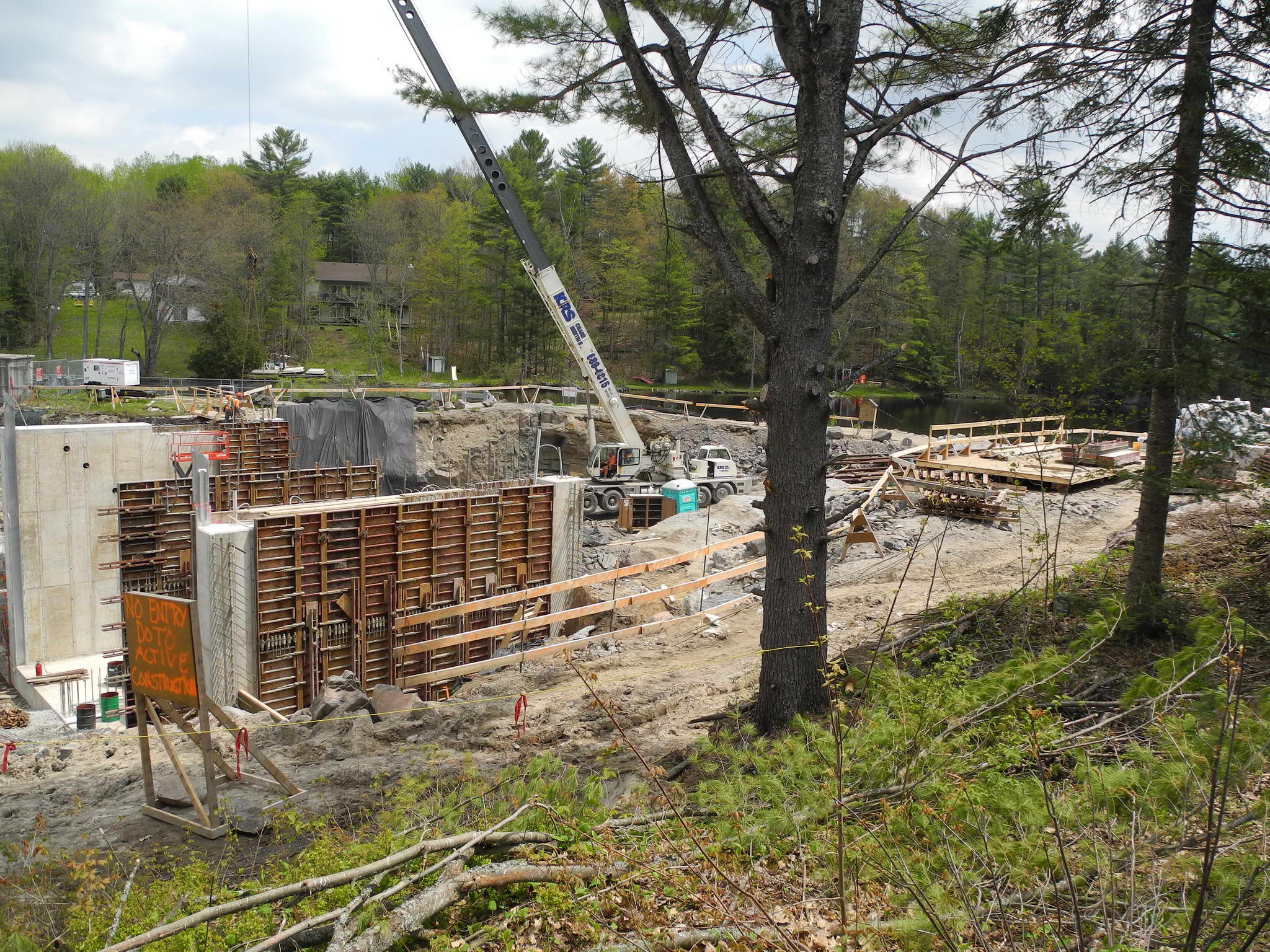
But it gets worse. Portage Landing would become a construction zone. There would be a huge crane, blasted rock, porta-potties, concrete forms, a huge steel sediment settling tank, fencing …

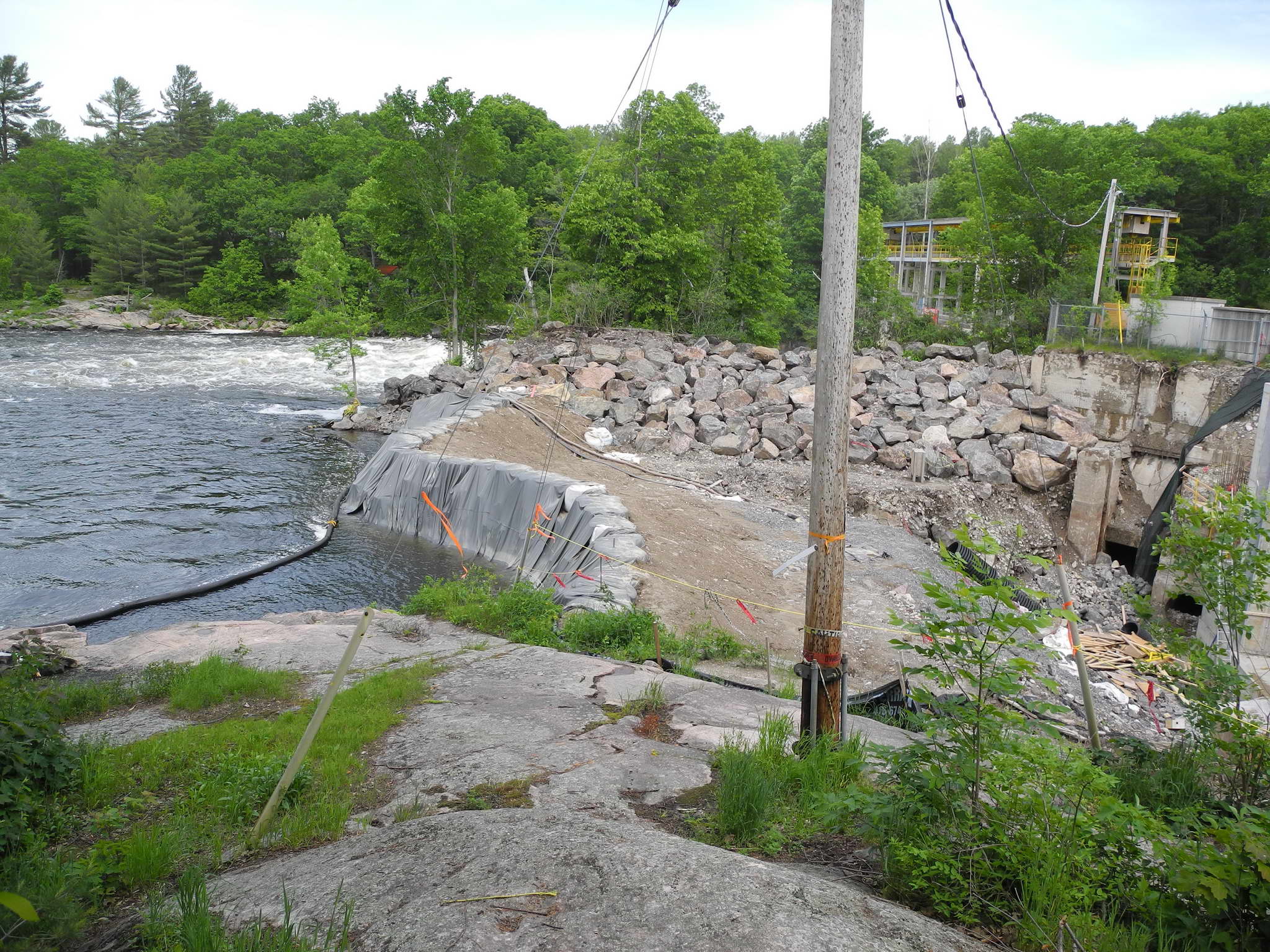
And there would be no Bala north falls. There would be a plastic and dirt cofferdam, such as this.

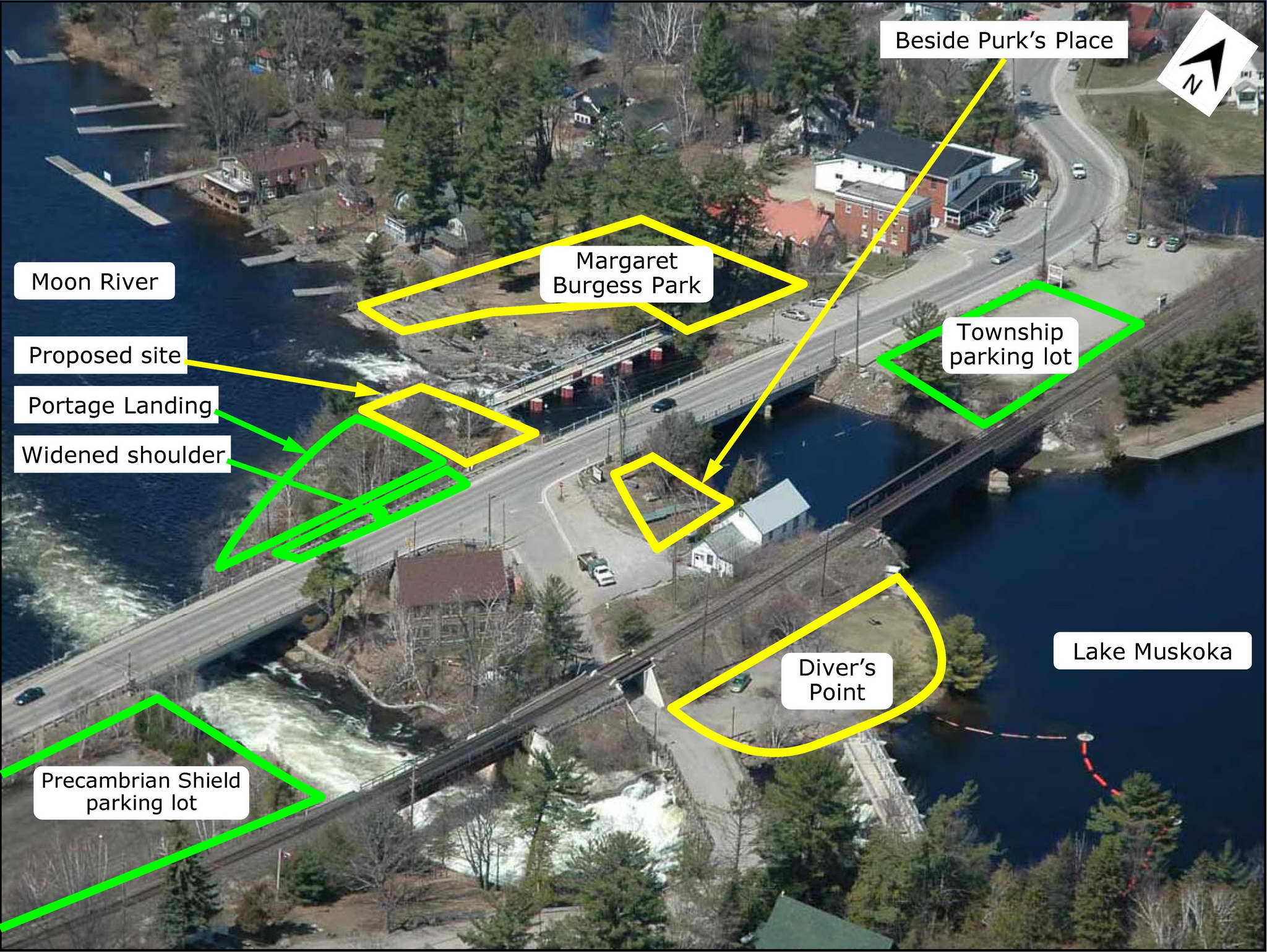
Perhaps the most ridiculous part of the proponent’s plan is that in addition to occupying Diver’s Point and the area beside Purk’s Place, they would want to make construction sites out of the Precambrian Shield parking lot, the Township parking lot (the south half of the Don’s Bakery parking lot), Portage Landing, and using the widened shoulder of Muskoka Road 169. Visitors couldn’t visit Margaret Burgess Park because there would be nowhere for them to park (the north part of Don’s Bakery parking lot is private property, for the retailers across the road).

So what good is keeping Margaret Burgess Park open if it is in the middle of seven construction sites, the view from it is only of cranes and cofferdams, and there’s nowhere to park anyways.

Oct 052014
 

The Muskoka Lakes Association has rated the candidates for the Township of Muskoka Lakes …
This process included individual interviews discussing a wide range of issues, the results are here. We are pleased to report that for Mayor and District Councillors, the Muskoka Lakes Association’s results are the same as our recommendations. For Township Councillors, while the Muskoka Lakes Association did not find any candidates that ranked higher than our recommendations, they rated some other candidates tied. However, if you wish to save the Bala falls, we still recommend only the following:

  1. If you are in Ward A (includes Bala, Torrance, Clear Lake, and Walkers Point), vote for:
    • Mayor: Alice Murphy
    • District Councillor: Ruth-Ellen Nishikawa
    • Township Councillors: both Sandy Currie and Donelda Kruckel
       
  2. If you are in Ward B (includes Windermere, Milford Bay, Ullswater, and Hekkla), vote for:
    • Mayor: Alice Murphy
    • Township Councillor: only Gunta Towsley
       
  3. If you are in Ward C (includes Port Carling, Acton Island, Glen Orchard, Foot’s Bay, Minett, and cottages on Moon River through the Chutes), vote for:
    • Mayor: Alice Murphy
    • District Councillor: Phil Harding
    • Township Councillors: only Jeff Mole

Our one-page summary is here, and more detail is at SaveTheBalaFalls.com

If you live or own property in the Township of Muskoka Lakes you should have already received your ballot in the mail. If you or your spouse have not, call the Township at 705 765-3156, this election is important in saving the Bala falls, and every vote is needed.

Mayor Murphy’s campaign has posted a video of the many accomplishments of the current Township of Muskoka Lakes Council under her leadership (for a larger view, click the wide rectangle near the bottom-right of the video window), a poster is here.

Did you know …

  1. Historical documents confirm that the Bala Portage has always been south of what is now called the Bala north falls, and this was created and used by First Nations people before 1837, detail here and here.
     
  2. In their enviromental assessment, the proponent stated there would be a “positive impact to portage” when in fact they would be obstructing and eliminating the historic Bala Portage. The fact is, the proponent provided incorrect information on this important issue yet they claim this was adequate consultation, detail here.
     
  3. Transport Canada and the proponent claim there are other portage routes between Lake Muskoka and the Moon River, but these either trespass over private property or are not safe, detail here.
     
  4. The proponent would only allow a trickle of 1 m³/s of flow over the Bala north and south falls throughout most of the year, which is about 6% of the usual flow, yet for Niagara Falls at least 50% of the flow of the Niagara River must go over the falls during spring and summer days. The Bala Falls are just as important to our area’s economy as Niagara Falls is to their’s, so the Bala proponent is just being greedy. More detail here.
     
  5. The proponent continues to provide vague and evasive responses to the fair and relevant questions asked for years by the public, more detail here.
     
  6. Some elected politicians think it is appropriate to have private meetings with the proponent rather than dealing in an open and transparent manner. Some proponents show rude behaviour towards the community they’re supposed to be working with. See both here (alternate video location here).
     
  7. For over a month, Peggy Peterson has been camping at the proposed construction site to protect the trees as the proponent is threatening to cut down and remove all the trees before the required First Nations consultation is completed. Peggy is often on Hunters Bay Radio and she is the Muskoka Lorax. An article in What’s Up Muskoka by Jack Hutton is here and an article about Mayoralty candidate Don Furniss insulting Peggy by incorrectly claiming she is being paid is here. If you’d like the honour of being Muskoka Lorax for a Day, drop by and visit Peggy, or e-mail us at info@SaveTheBalaFalls.com to arrange this.
     
  8. The proponent’s proposed construction would make a complete mess of Bala for “up to two years” (so who knows how much longer it could be). They want to make construction sites out of seven locations, all within 150 m of the Bala falls, and one of their wishes is to make the bad deal that instead of making a mess of just Margaret Burgess Park, they’d like to make a mess of four other sites instead, details here.

Car Decals

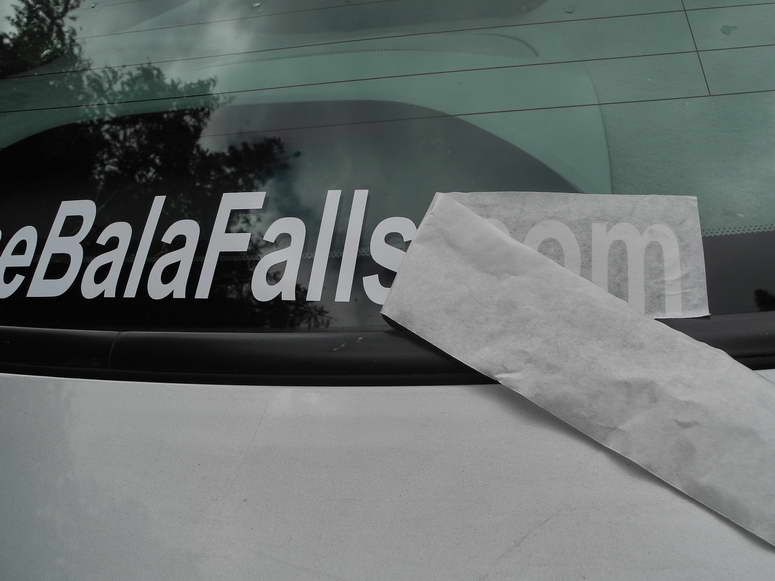
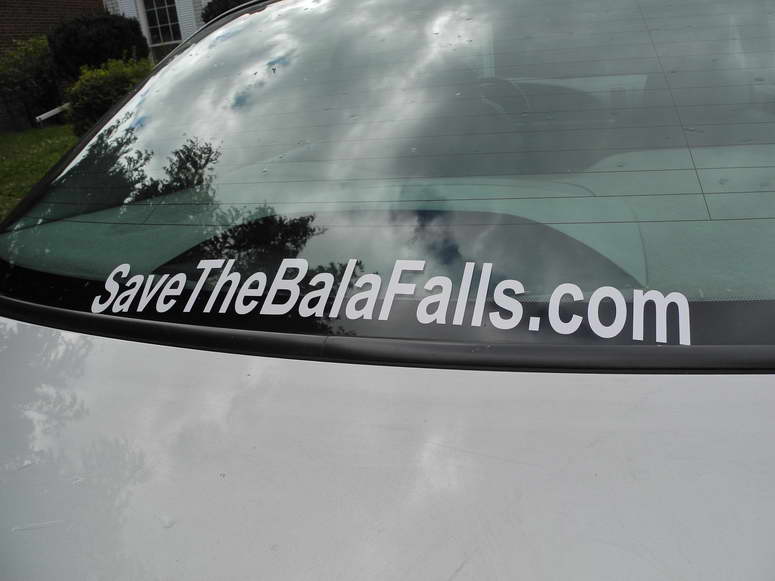
Show you want to save the Bala falls by putting a SaveTheBalaFalls.com decal on your car. This uses high-quality removable vinyl letters that can be applied to the window, body or bumper of your car in just a few minutes, as shown here. Get yours in Bala at Purk’s Place or e-mail us at info@SaveTheBalaFalls.com to arrange pick-up or delivery in Toronto.

Oct 052014
 

Show your support for saving the Bala falls by putting a SaveTheBalaFalls.com decal on your car.

The white vinyl letters and adhesive are designed to not damage your car’s surface and can later be easily removed.

Get yours at Purk’s Place or e-mail info@SaveTheBalaFalls.com to arrange pick-up or delivery in the Toronto area.

Your SaveTheBalaFalls.com car decal

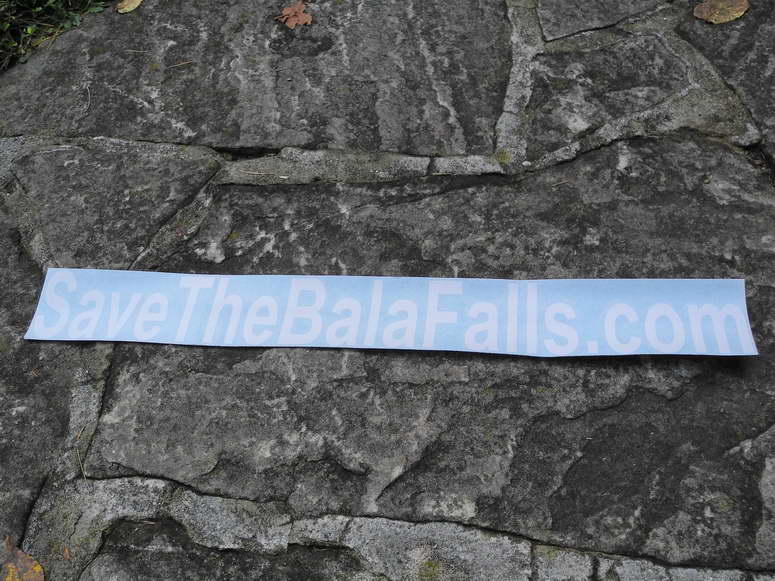
The SaveTheBalaFalls.com car decal is 20″ wide x 2¼” high

For best results, the decal should only be applied when the temperture is above 10ºC.

The decal has a heavy backing sheet (blue) and a translucent transfer tape over everything.

Your SaveTheBalaFalls.com car decal

Decide where to position the decal

Clean the surface where it will be applied, at least with water, preferably with Windex.

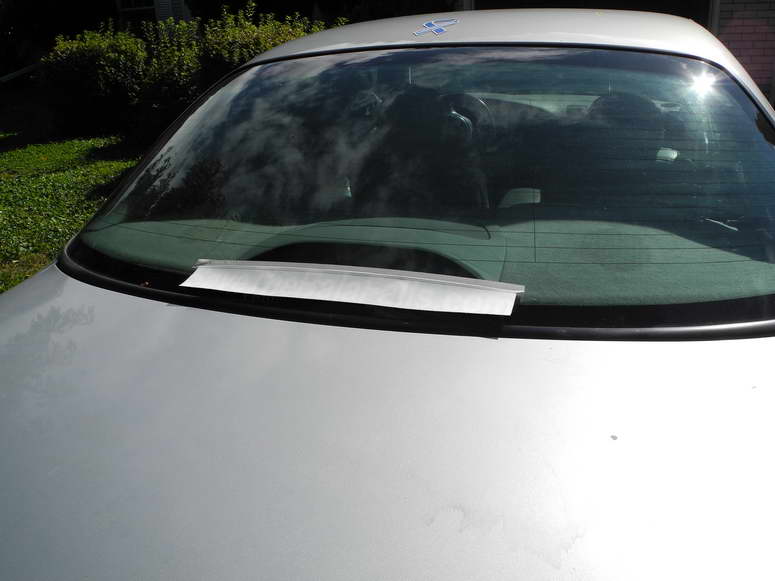
Without removing either the backing sheet or transfer tape, decide exactly where to position it:

  • The centre of the decal is at the left edge of the “l” in Bala.
  • Holding it in position, decide how you will ensure it is level (for example, positioning the two bottom corners just above the moulding).
  • The decal can be applied to the outside of your window, to the body of the car (the adhesive is designed to not damage the paint), or your bumper.
Your SaveTheBalaFalls.com car decal

Remove the backing sheet

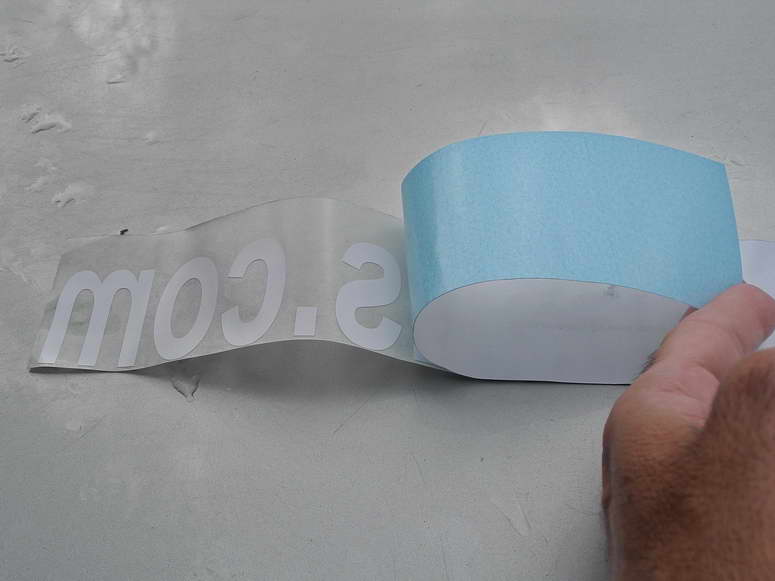
Remove the heavy blue backing sheet:

  • Don’t let anything touch the sticky back of the white vinyl letters.
  • The transfer tape has a light adhesive to hold the letters.
Your SaveTheBalaFalls.com car decal

Apply the decal

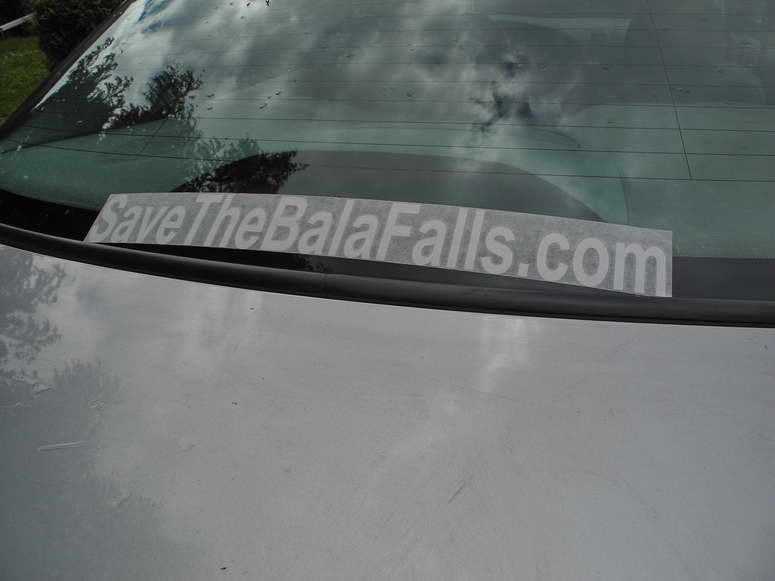
Holding each end of the decal (by the transfer tape, keep your fingers off the back of the letters), keep the decal above the surface of the car until you have it aligned/centred/level.

Then press everything onto the car. Pressing down with your finger, trace along each letter to adhere all of each one to the car.

Your SaveTheBalaFalls.com car decal

Remove the transfer tape

Pull the transfer tape off at a sharp angle (that is, don’t lift the letters up, have the tape bent 180º so the letters are not lifted).

Your SaveTheBalaFalls.com car decal

Let people know you support saving the Bala falls