Sep 222010
 

Summary
The fast water exiting the proposed Option 1 power station would make water access to the downstream docks dangerous. This is yet another reason why the proponent would not, and could not build Option 1. Option 1 remains an idle threat.

The Four Versions of Option 1

  1. The proponent first proposed what is now called Option 1 in 2005, with this plan view.

  2. Then to the District Municipality of Muskoka Council meeting on October 14, 2008, they presented this drawing.

  3. As part of their 2009 Environmental Screening Report and the process leading up to it, they provided this different plan view for Option 1. Note that throughout these years, the proponent stated that all these versions of Option 1 required only land owned by the province, but as you see here, these require land from the District Municipality of Muskoka (which was transferred to the Township of Muskoka Lakes in 2011).

  4. Then about September 20, 2010 to try to scare us into thinking they really could and really would build Option 1, the proponent posted the following sketches for yet another incarnation of Option 1 (they removed these drawings from their web site in mid-2011):
    • Option 1, General Arrangement – 4.36 MW Vertical Axis Unit Powerhouse. This is a view looking down at the entire site, with the Moon River on the left. Note:
      • The two 90° bends in the intake water path (this restricts the flow, and therefore constrains the power output).
      • That the intake excavation (which slopes down to 38′ below the bedrock) is directly adjacent to at least three piers of the north dam and to the highway bridge supports.
      • That the water discharges perpendicular to the north dam, directly down the Moon River.
    • Option 1, Plan at Generator Floor Level. This is a plan view (looking down) at a cross-section of the powerhouse (as if the top was sliced off) at the bottom of the level the water enters. The water enters from the top-right, and exits at the left.
    • Option 1, Plan at Centreline of Turbine Runner. This is also a view looking down at a cross-section of the powerhouse, but at the level of the turbine runner (this is the technical name for the propeller that is turned by the falling water). Again, the water enters from the top-right (the intake excavation is shown with the invert – the bottom of the intake channel – sloping down into the intake, 1 m for every 3 m horizontally), and exits at the left (sloping up, into the Moon River, 1 m for every 4 m horizontally).
    • Option 1, Section at Intake Centreline. This is an elevation (side view) showing a vertical section looking upstream from the Moon River (as if the side towards the Moon River was removed). The water enters from the left (with the intake sloping down towards the turbine), and exits towards the viewer. The generator is above the turbine runner. The District land to the south of the powerhouse is on the right. Note that the transformer is shown both in this drawing and others as on the top of the structure. Note also that directly below the transformer is an electrical room. For Option 2 the proponent has shown that they can locate the transformer in the electrical room. This is yet another indication that the purpose of these sketches is only to scare the public into wanting Option 2, by presenting Option 1 as being as ugly as possible, and as feasible.
    • Option 1, Section at Unit Centreline. This is also an elevation looking south, in the direction the water would flow into the turbine. The highway is on the left, and the water exits to the right, with the invert of the tailrace sloping up as it goes downstream into the Moon River. The excavation for the power station requires that most of the MNR land adjacent to the north dam would be excavated to be a 67′-deep hole directly adjacent to the highway. Imagine the logistical problems:
      • The blasting would be adjacent to the highway, and this would require many traffic disruptions.
      • Removing the blasted rock would be difficult, as the dump trucks required would also disrupt traffic flow.
      • At least half the north channel would need to be blocked off for months of construction, and would not be available for flood control during this time.
    • Option 1 General Arrangement_colour, annotated was posted about September 26, 2010. This top view of the site highlights a 9′-wide driveway (this leaves 1′ clearance from the powerhouse one one side, and 1′ for a curb and fence on the other side) along the south side of the top of the proposed power station.
      • You’d want to be careful jumping out of your truck, as the driveway would be an average of 18′ above the District land to the south (but that might not be a problem as there isn’t enough room to open the door to your truck anyways).
      • As there is no room for a truck turn-around, trucks would need to back down this 55′-long driveway which has a curve at one end, and at the highway end, the view of the oncoming traffic is blocked by the powerhouse.

As can be seen in this drawing, the flow of water discharged from the most-recently proposed Option 1 power station would be generally downstream along the north shore of the Moon River, and would spread slightly, as shown by the red arrows.

Note that there are both residences with docks, and the town docks on the Moon River all of which would become too dangerous to use as a result of the fast water from the proposed Option 1 power station. The rights to continued use of shoreline water are called riparian rights, and would be infringed. This is yet another reason why the proposed Option 1 could not be built.

Conclusion
One additional identified problem with the proposed Option 1 is that it would make docks, both private, and the town docks on the Moon River too dangerous to use. Also, the excavation for the powerhouse itself would be very difficult and disruptive.
Sep 212010
 

In September 2010 the proponent posted an 11-page Briefing Note – August 17, 2010 on their web site. In it, there is so much misinformation presented that we are compelled to respond. Particularly egregious statements by the proponent are quoted below on the left, with our response on the right in blue.

We understand that this is major information overload to wade through this detail, but if we are to Save The Bala Falls and expose what the proponent is attempting to do, the details are crucial.


From the project’s inception, we have bent over backwards to be transparent about our plans, and to solicit and incorporate community comments and concerns into the design and planning for this facility …
… We have had innumerable meetings with …
We are proud of our efforts and we are especially pleased that these efforts have made for a substantially better project.

Perhaps the proponent bent over backwards, but only to defend their frustratingly vague plans. As detailed in Section 2.9.2 of our Technical Response, the only change the proponent has made to their project was a carefully-orchestrated (by convincing local politicians that both the proponent and the politicians were doing the community a favour) introduction of the proponent’s Option 2, and this for the self-serving benefit of justifying a larger power station.


The original Option 1 Plan proposed that the facility would be contained in an above ground structure located entirely on crown land abutting Bala’s North Dam and waterfall. The Option 1 Plan would not require the use of, or rights to, any adjacent properties …

The proponent had many people believing their threat that if the District land is not available to build Option 2, then the crown land is all they need to build Option 1. This diagram exposed what the proponent would later blame on a “surveying error” – that Option 1 (as originally described from 2005 through to September 2010) would not fit on just the crown land (more detail is here and here).


… the District of Muskoka passed a Resolution to enter into an agreement with SREL, to provide a small parcel of District-owned land …

Now, instead of bending over backwards, they are bending the truth here (read the resolution for yourself). It states that the District only agreed to consider use of the land, subject to environmental concerns – and these include safety, tourism, and the local economy. And we’ve shown the proponent has not provided adequate responses in these and other important areas (so they don’t take their obligation to the community seriously).


It is this Option 2 Plan (an underground facility …

This time they’ve bent the truth so far they done and broke it. The proponent keeps repeating this big lie as if it will eventually come true. Their own drawing shows their poured concrete building would rise 18′ above the Moon River, and it would be over 33′ wide. This is like a two-storey house right at the shoreline, there is nothing “underground” about that.


Page 2 of 11, Another Big Lie their rendering of Option 2.

The proponent continues to show this fictional rendering. Some of what is wrong or missing is shown in our marked-up version. And note that none of our concerns involve landscaping. We need to know what would be under the landscaping.


Concerning the proponent’s proposed Economic Impact Study …


  1. To assess the economic and tourism impact during construction, the proponent has e-mailed this survey to selected business owners. The only disruption to business presented are the road closures, for example, the survey self-servingly neglects to mention:
    • That the view over the Moon River at the north falls will be of; a massive 270′-long rock and plastic coffer dam, with dead fish on the enclosed dry riverbed, a huge construction crane with a 100′ boom, safety fencing, and on and on.
    • There will be a huge, ugly, and noisy temporary bridge with a significant up and down ramp which – apparently, but unbelievably – won’t require a traffic speed reduction even though it will be very unfamiliar to drivers (I’ve never been on such a thing) and goes through an active construction site.
    • That the beautiful Bala Falls road will be a dead end for the duration of the construction project, with a construction trailer, porta-potties, materials storage, and heavy construction equipment. The survey has lots of words attempting to bribe local businesses with the expectation of selling a few more sandwiches (while the town is destroyed), but very few words to describe the appearance of Bala during construction.
  2. To assess the long-term economic and tourism impact, the survey continues:
    • That the summer flow at the north falls will continue, but they neglect to note that the summer drought conditions flow will be year-round, and they neglect to note this applies to the important south dam as well. People come to Bala to see the falls, not where they used to be.
    • The proponent only describes the fake park they intend to build on top of their concrete cube of a power station. But don’t mention the noise and vibration there, the safety issues upstream and downstream, the fencing, and on and on. Yet they expect people to list their concerns in a little text box that they cannot even save and edit at a later time, or keep a copy of. People come to Bala to see the natural beauty of the area, not to see a concrete cube with rocks piled up the side.


… forming a Community Advisory Committee to help us work out the detailed design for this natural area.

The proponent continues to attempt to lure the unsuspecting public into this lose-lose situation. There is no way to disguise a 33′-wide, 18′-high concrete cube right at the shore of the Moon River. It will be ugly, and trying to spread the blame by including the public in this impossible task is attempted trickery.

The proponent then continues with what they perceive are some “Fictions”, let’s examine some of these:


… [the proponent] expects that the District of Muskoka will honour its commitment made in a District Council Resolution (2008) to enter into a lease agreement.

As described above, there was no committment, and certainly if the proponent is not providing needed information and has manipulated the situation, the District should not continue to support this disaster.


… [the proponent] is fully prepared to pursue its rights to develop the Option 1 Plan on the crown land only.

The threats continue, but as detailed here, we don’t believe the proponent would or could build Option 1.


While some additional work may be required, the technical and economic viability of the Option 1 Plan abutting the North Dam’s waterfall was confirmed during the Ministry of Natural Resource’s Site Release process back in 2005.

“Some additional work” – well that is a multi-million-dollar understatement. Option 1 would require rebuilding the north dam as well as the highway bridge (and this work would have huge disruption and timing implications), all while producing less power and therefore being less profitable than the proponent’s beloved Option 2. Option 1 just won’t happen.


Fiction: The scenic falls will be dried up to just 1 cubic metre per second of water, a “mere bathtub amount”.

Despite their confusing bafflegab, the north falls and the south falls would be just a trickle. The proponent conveniently forgets; that the view of the south falls is also important, that even this August 2010 the water ran over the top of the north dam, and that the view of the falls is important outside of the summer season. They would like us to believe that taking 94% of the water won’t affect tourism, recreation, and the view.


Fiction: That the project would shut out public access to hundreds of metres of shoreline. FACT: This is simply not true … (blah blah blah).

While the proponent conveniently provides their diagram confirming that indeed hundreds of metres of public shoreline would no longer be safe for the public (in the diagram, this is anything adjacent to the yellow area), the proponent neglects to mention; that their project would make the calm waters in the north channel become dangerously fast (so more likely requiring fencing), and that the water south of their proposed building would be at the base of a tall retaining wall for the driveway with no public access shown (so the restricted areas are in fact greater than they show).


  • So the proponent can’t blame all the problems they are causing on the Ministry of Natural Resource’s public safety efforts.
  • The simple fact is the proponent would be creating new dangers and this results in newly dangerous and inaccessible public shoreline.


FICTION: The dangerous flows around the power station would virtually prohibit those activities now enjoyed in the area surrounding Bala’s North Dam. FACT: Transport Canada, the governmental agency responsible for assessing the suitability …

There are more recreational activities than boating, and the proponent neglects to respond to the loss of these.


FICTION: Advertisements are being placed by the OPP and OPG warning the public to stay away from hydro stations and surrounding shorelines and waterways. These warnings and fines will only serve to scare away tourists. FACT: These critics ignore the fact that these warnings pertain to dams, whether or not they have power stations associated with them and will continue to apply to Bala’s two dams irrespective of the proposed small hydro project.s.

Firstly, listen to the public service announcements for yourself here (at the right side, click on “Watch 2010 PSA” and “Watch 2008 PSA”)

The safety concern is hydro dams and power stations, due to the danger of the changing and unknown flow of water through them. This is not a concern now, due to the stop logs being manually changed, but would be a concern with the proposed project which would be remotely operated.


FICTION: The centuries old portage route between Lake Muskoka and the Moon River would be obliterated by the massive water intake grate for the turbine … FACT: The “centuries old portage route” is not a …

The point is the traditional, safest, and best places to get your canoe or kayak into and out of Bala Bay and the Moon River are exactly where the proposed power station’s intake and tailrace would be. And the alternate locations available all involve significantly more danger and difficulty.


  • This is just another example where there is no mitigation.
  • The proposed project would greedily take what it needs for itself, jam concrete and new fences into the most beautiful places, create new dangers for this small town, and rip the heart out of Bala’s economy and tourism.


Sep 062010
 

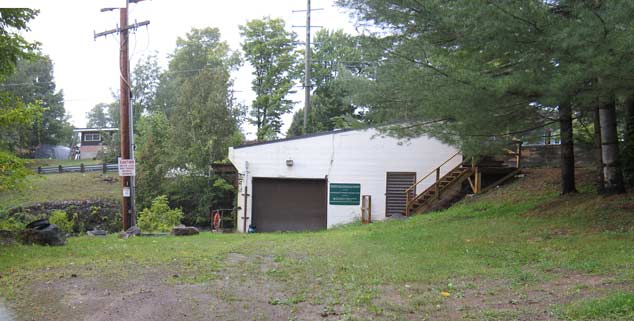
There has been a power station on the Mill Stream (also called Burgess Creek) in Bala since 1917. As you see in the photograph above, it is a simple structure. Recently, this power station has been operated by Algonquin Power & Utilities Corp.

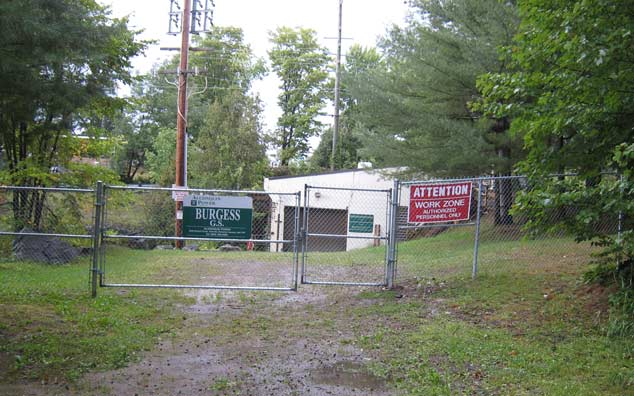
Without any community consultation or incident, last year they decided to install a fence.

So as you see below, after almost a hundred years of peaceful operation, in just a few days, an ugly chain-link fence has been installed, complete with sharp wire tops.

This is one of the many concerns we have for the proposed power station at the Bala falls.

The simple natural beauty of the area could be completely ruined if some safety or insurance requirement resulted in a fence being required.

Not only has the proponent not provided any effort to show a correct rendering of the structure, we have no assurance of what fencing would be required, both on or around the structure, as well as along the north channel.

Sep 062010
 

Tom Millar has written two excellent articles whcih have been published in the September 2, 2010 issue of Muskoka Today, read them here.

The first article notes that the Township of Muskoka Lakes paid for an 8-page lawyer’s opinion which appears to state that the Green Energy Act does reduce the Township’s ability to stop the proposed project to build a hydro-electric power station at the Bala falls.

  • However, this opinion does not apply to this project since the project requires land from the District Municipality of Muskoka, and the Green Energy Act does not provide any right of expropriation (as noted here).
  • But Tom Millar’s article goes further, and provides confirmation from the Director of the Environmental Assessment and Approvals Branch of Ontario’s Ministry of the Environment that being a waterpower project, it is separately regulated (a summary of the process is here).

So our misinformed politicians do seem to be mistakenly under the impression that they have no power to stop this proposed project.

But wait, there’s more…

Tom Millar’s second article notes that the Township council did not honour their committment (made in front of hundreds of people at the Town Hall meeting August 14, 2010) to make a statement that they do not support this proposed project. Instead, our politicians simply repeated what they already stated; that they want the province to decide what to do (by requesting that the project be elevated to requiring further study). Our elected politicians should be listening to their electorate and should represent their electorate’s views – and simply state that they do not support this proposed project.

Aug 252010
 

On August 24, 2010 the Township of Muskoka Lakes council met to hear delegations and consider a resolution on the proposed project to build a power station at the north Bala falls.

Despite comittments made at the August 14, 2010 Town Hall meeting (see this article), the politicians did nothing (that is, they simply said what they said before – that the province should look real close at this).

The politicians are not standing up for Muskoka, but instead are hiding behind the province, hoping the province will protect Bala. The province is now only requiring the proponent to further investigate economic issues, and are ignoring all the others, such as safety, appearance, performance bond, fencing, traffic, noise, fish habitat, and water access.

Only locals understand how the area is used, and the importance of requiring that
all locations be considered to determine if there is a better place for a power station. The province’s process does not allow for a broader view of the proposed project, so only local politicians can ensure this happens.

We need politicans that appreciate that the province isn’t asking all the right questions of the proponent, and that can see that the information needed is not being provided by the proponent.

We need politicians that will withhold the District land to ensure that Bala’s interests are protected.

We need politicians that can keep a comittment. Clearly, there are opportunities for candidates that will show leadership.

This council meeting was widely covered by the media on August 24, 2010, for example (click to see the article):

SaveTheBalaFalls.com

Aug 202010
 

Our comments (in blue) on the proponent’s August 20, 2010 letter to the editor (quoted verbatim) of the Weekender newspaper, which they entitle “Bala Falls Fact vs Fiction”…


The Bala Falls Small Hydro Project has become a bit of a celebrity over the last 3 years, attracting community and media attention. Like most celebrities (loved or hated), people seem to turn not to FACTS to form their opinions, but to RUMOUR and speculation, perpetrated on websites with other agendas, and biased media reports.

OK, let’s talk truth, the whole truth.

This phenomenon has resulted in a multitude of FICTIONAL descriptions of the project and unfounded fear fact. An example is that the north falls will “dry up to a trickle”. The FACT is that flows over the north falls will be identical to what has been experience all summer.

Not quite. For example, this past August weekend, due to the recent rain, water frequently ran over the top of the north dam. This would not happen if the proposed power station was in place.

And the proponent neglects to mention that so long as their proposed power station can handle it, the water through the south channel would be a maximum of 1 m3/s ALL YEAR. This photograph shows the south dam with a flow of 2 m3/s – half of this (that is, the 1 m3/s proposed) is indeed a trickle, which is all that would flow when it would be up to 80 m3/s without the proposed power station. This photograph shows the south channel with a flow of 2 m3/s – again, half of this would indeed be a trickle.

And just because the flow over the falls may be lower in the summer, this lower flow would not be acceptable year ’round – where’s the fiction in that. People do come to Bala in other seasons and the higher flow is important then too.

The latest FICTION is that if the Municipality reverses it’s previously passed resolutions to support the lease of a small portion of District land to SREL, that SREL will be forced to cancel the project. The FACT is that SREL’s original Option 1 Plan was located entirely on provincial crown land, and while it would result in a smaller project, it will also be significantly cheaper. The original resolutions were passed in 2008 to move the project 35 m away from the north falls, and create a sunset view deck and park atop of a buried powerhouse – in response to council suggestions. The land lease also provides a vehicle for the municipality to benefit from the project through associated lease payments.

First, the Township (see page 15 of the minutes) and District (see page 2 of the minutes) only agreed to consider (and subject to certain conditions) the use of District land for this purpose.

Second, the proponent’s proposed Option 1 would not fit on just the crown land (even though they keep telling us all they need for Option 1 is the land the Ministry of Natural Resources has agreed to provide) – see this drawing. And even if it did, there wouldn’t be room for the driveway and other site needs.

Third, nobody said that the proponent would be forced to do anything. We’re saying the proponent would not build their proposed Option 1, as it would:

  • Be so unprofitable, as it would generate little power due to;
    • The shallow intake (currently only 6′ deep, compared to the 45′ proposed for Option 2) – and excavating deeper would be very difficult because the intake would be directly adjacent to the north dam and the highway bridge.
    • The obstructed intake (due to the highway bridge supports), and also due to the required sharp change of direction of the water flow.
  • Be expensive and much more disruptive to build than Option 2, because the north dam and highway bridge would likely need to be completely rebuilt.
  • Be difficult to situate on the site, as there is no room for the driveway or for hoisting equipment.
  • Impinge on the District’s riparian rights, both due to the dangerously fast water exiting the tailrace just beyond the shoreline, and due to the need to anchor the safety boom.

SREL has bent over backwards trying to address the Municipality’s concerns including completing the requested Heritage Study and the recently initiated Economic Impact Study. We have also discussed the possibility of assisting the Township with its project initiatives such as a new snowmobile bridge.

The proponent is only trying unilaterally push ahead with their plan without accomodating the local needs. The proponent has not made any significant changes to the project to accomodate tourism or the local economy, or made any information available as requested.

The proponent just keeps repeating the evasive answers from their environmental screening report.

The truth is: the falls would become a trickle, we still don’t know anything about the appearance of the structure, the water intake through the north channel would become a threat to the long-time existing recreational activities upstream, we have no information on what organizations would have what responsibilities for rescues or emergencies, or even on what steps or time would be required to shut down the unattended power station in an emergency, and on and on (more detail here).

And this snowmobile bridge. Let the proposed hydro-electric power station project be judged on its own merits, trying to bribe us with a bridge is just trying to distract us from what is really going on.

We are now having our engineers clarify the misinterpretations brought up at the last council meeting. It would be irresponsible for the Township to reverse its position on the Option 2 Plan prior to obtaining the information they just recently requested. The question is NOT “Is the Township for or against the Project?”, but “Does the Township refer the Option 1 Plan (above ground facility abutted to the North Bala Falls) or the Option 2 Plan (buried house, 35 m away from falls, with a park atop and lease payments to the District)?”.

The proponent claims they are battling FICTION – yet the proponent continues to state the structure would be “buried”. This is simply not true:

  • The proposed concrete building would be at least 33′ wide and rise at least 18′ above the Moon River, this is not “buried”.
  • This is as tall as a two-storey house – built right at the shore, centred on Burgess Island, at the head of the Moon River, in full view of everyone on the water, on either shore, or viewing the falls from the shore’s main viewing area. How can this be called “buried”.

And about that “park atop”: Clear-cutting all the trees on Burgess Island and then building a powerhouse which would be a concrete cube with rocks piled up the side, with three 13′ x 13′ removable hatches on the top (through which one would hear the factory-like hum of machinery), and then planting some little shrubs to make a garden like those on Toronto condominium underground parking garages does not a park make.

Contrary to the FICTION being tossed around, the FACT is that the Option 1 Plan was feasible in 2005 when we first started this project, and is only more attractive with the Green Energy Act. I would suggest that a more constructive debate for the Township Council would be “how can we ensure that the lease payments for Option 2 Plan are used for the benefit of Bala instead of being spread throughout the District”.

It appears that the proponent is trying to get the Township to fight the District. More attempts at distraction. A posting concerning the Green Energy Act and Option 1 is here.

Aug 182010
 

There are currently two important issues which we would like to clarify.

The Green Energy Act
As noted in the lawyer’s opinion here, the Green Energy Act has provisions which restrict municipalities from being able to stop the development of renewable energy sources.

  • However, these restrictions apply to land owned by a developer that wants to use their own land for renewable energy projects.
  • The restrictions do not apply to land owned by a municipality.
    • Therefore, if the municipality does not wish its land to be used for a renewable energy project, then the Green Energy Act has no power to require the municipality to allow a private developer to use the land for any particular purpose.

That is, if the District Municipality of Muskoka does not want its land used for a power station in Bala, then the District’s land will not be used for a power station in Bala. The Green Energy Act cannot force the District to use the District’s land for a power station.


The “Threat” of Option 1
In a recent Gravenhurst Banner article (here, and a pdf version is here), the proponent continues to state that if the District land is not provided so they can build their Option 2 power station, then the proponent will use just the land provided to them by the Ministry of Natural Resources to build their Option 1 power station.

For reference:

This is an idle threat, for many reasons.

  • Available Space. While the proponent claims they drew Option 1 as needing District land due to a surveying error, they would still need a driveway, somewhere to anchor the tailrace safety boom, and room for hoisting equipment. That is, the MNR land is too small for a power station of any useful size.
  • Intake. For Option 1, the depth of the water at the intake is currently about 6′, which is less than 15% of the 45′ depth needed for Option 2.
    • The excavation would be substantial, difficult, and tricky:
      • The intake channel for the proposed Option 1 power station would need to be excavated 38′ down into bedrock. To ensure the intake channel is wide enough, the sides would need to be almost vertical (it would be about 43′ wide at the top, and 33′ wide at the bottom – more detail is here).
      • This 38′-deep intake channel would be less than a foot from the supports for the highway bridge and even closer to the concrete piers of the north dam.
      • This would require building a coffer dam to block half the north channel, and this would need to be completed before the north channel may be needed for flood control.
    • The path of the intake water would also need to have at least a 45° bend which would significantly restrict the intake channel.
    • These problems could be avoided if the Option 1 power station’s capacity was as small as the previous power station (which was 0.3 MW), but the proponent would not find such a small station profitable (the capacity of the proposed Option 2 power station is 14 times greater than this – 4.3 MW).
  • Tailrace. The discharge of the water from the tailrace would make it too dangerous for recreation at the base of the north falls, and for the homes and cottages downstream of the north falls to dock their boats (that is, Option 1 would impinge on the riparian rights of the downstream property owners, more detail here).
  • Environmental Screening Report. The proponent would need to begin the entire environmental screening process again, and do much of the work and studies again (effect on fish spawning and entrainment, effect of directing the water at the south bank of the Moon River, traffic disruption, north channel obstruction during construction, building design, and on and on).
    • This would take more than a year, would cost more money for the studies, would result in a less-profitable power station, would again encounter significant opposition from the public, and may well not be allowed by the Ministry of the Environment anyways.

In summary, if the proponent could not build their proposed Option 2, then they could not, or would not, build Option 1.

Aug 182010
 

As detailed here, at least 50% of the flow of the Niagara River must go over the Niagara Falls during the days from April through October.

That is, even with the United States and Canada having to share the water, the countries were still able to agree that a significant amount of water is needed over the falls to support tourism and the local economy.

But the Bala proponent would only allow 6% throughout most of the year. We should insist on much more, as the flow over the falls is what brings people to Bala.

Aug 162010
 

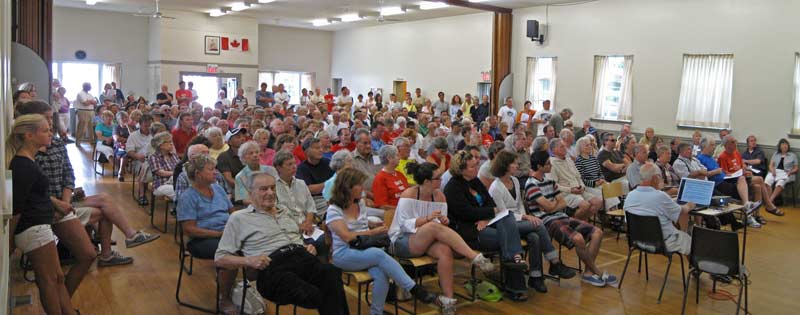
Wow, what a turnout, excellent interaction between the public and the politicians, great information exchange and question and answer session. The presentation is here.

The Gravenhurst Banner August 18, 2010 article covering the meeting is here (a pdf version is here).

The Muskoka Today August 19, 2010 newspaper published two articles, here and here.

Aug 112010
 

A special meeting of the Township of Muskoka Lakes Council was held August 11, 2010, and this report was presented.

The report has three sections:

  • The last 11 pages is the proponent’s March 18, 2010 response to questions raised by the Township in their request to have this project elevated to require further study.
  • The 8 pages before that is a legal opinion sought by the Township concerning whether the province of Ontario’s Green Energy Act impacts the Township’s jurisdiction over this project.
  • The first 20 pages is a staff report to Township Council commenting on the proponent’s 11-page March 18, 2010 response.

The Gravenhurst Banner published this article (a pdf version is here) about the meeting.